


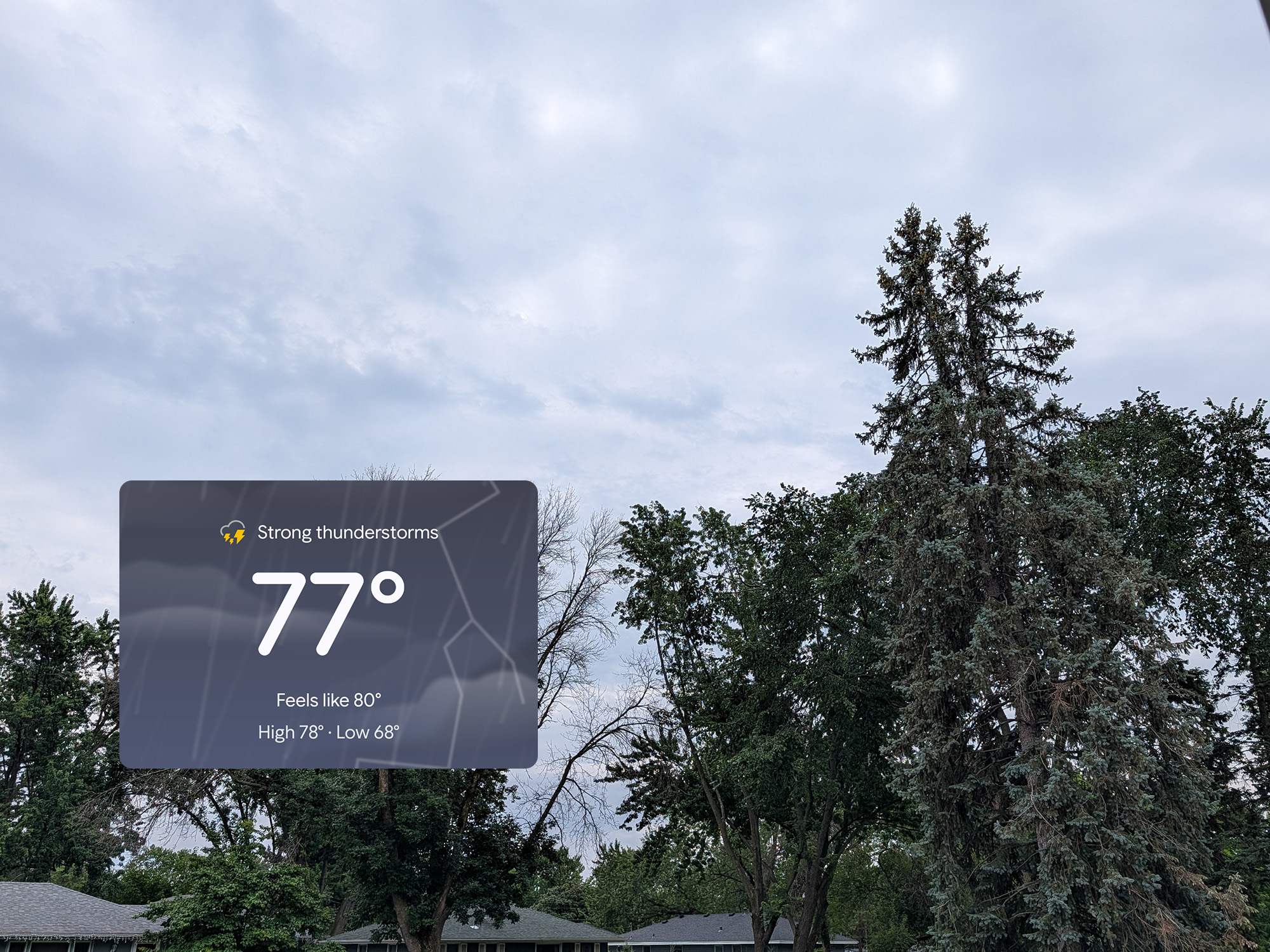
Google’s weather experience on Pixel phones has gotten frustratingly unreliable, especially when it comes to current conditions.
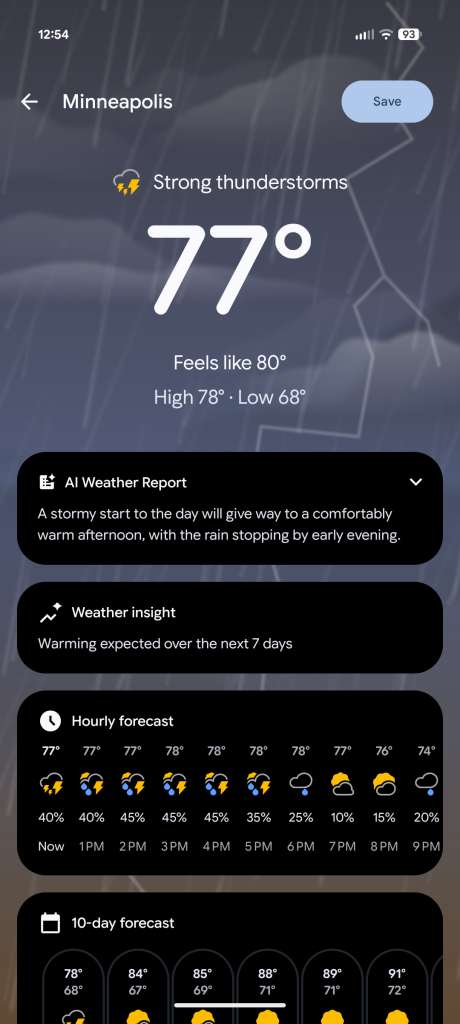
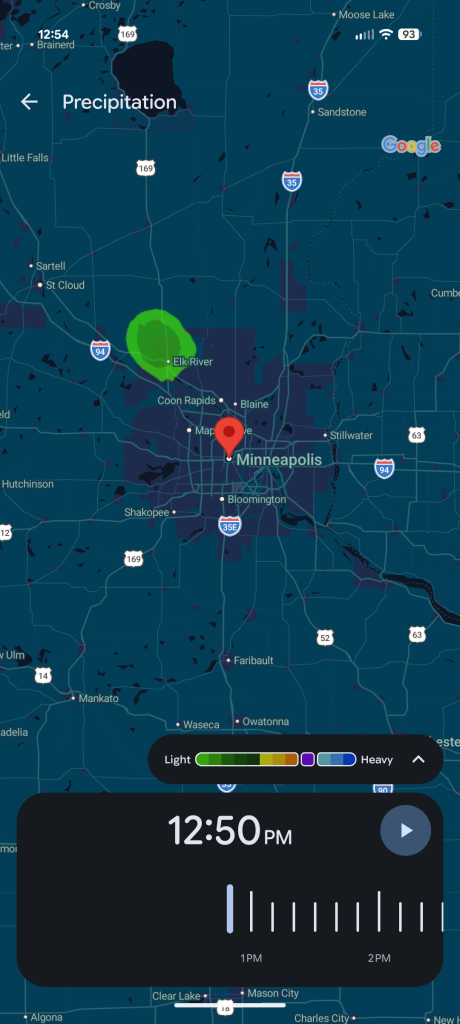
Today in Minneapolis, my Pixel showed that it was thunderstorming and raining. The problem? It was not raining. There was no thunderstorm. There was no active storm overhead. Looking outside told one story, while Google’s weather app told another.
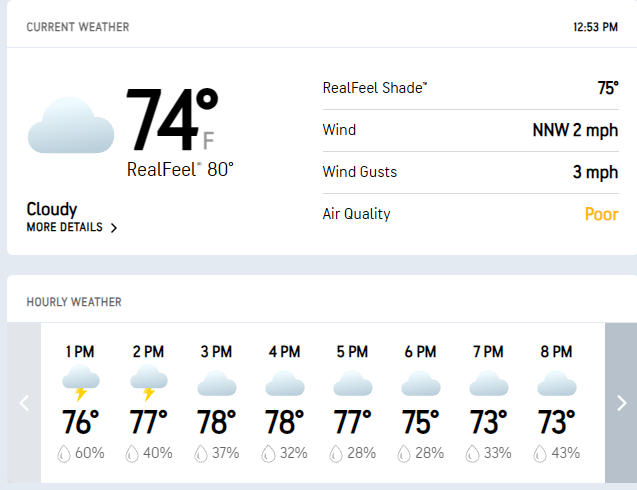
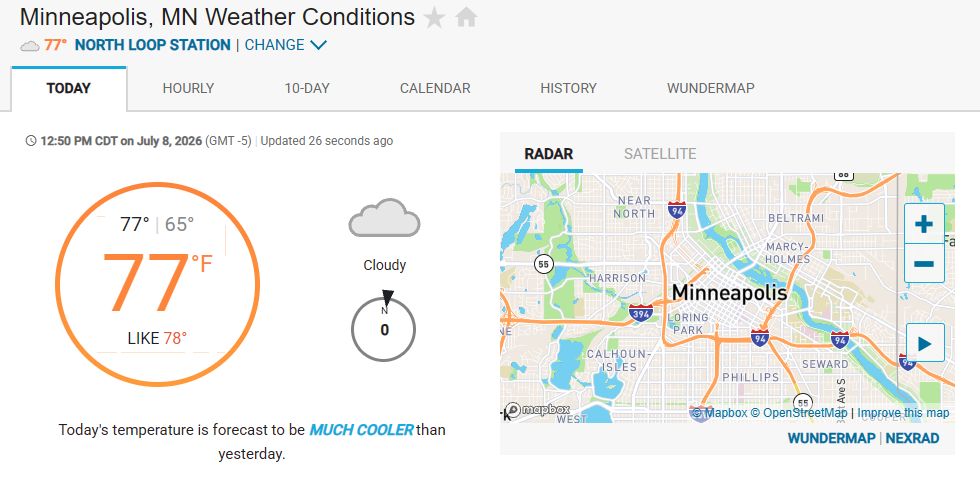
That would be annoying on its own, but it gets worse when you compare it to other weather services. AccuWeather showed cloudy conditions, 74 degrees, light wind, and only a chance of scattered rain later in the afternoon. Weather Underground showed Minneapolis sitting at 77 degrees and cloudy, with no active rain indicated at the reporting station. Radar also showed scattered cells around the region, but not widespread rain directly over Minneapolis.
In other words, there was a chance of thunderstorms in the area, but Google appeared to be treating that possibility like it was actively happening.
That distinction matters.
Weather apps are supposed to separate current conditions from forecasted conditions. If storms are possible later, the app should say that. If radar shows storms nearby, it should make that clear. But telling users it is currently thunderstorming when it is not raining at all makes the app feel unreliable.
This is especially frustrating on Pixel phones, where Google controls the software experience. The weather widget is built directly into the phone’s home screen and lock screen experience, so when it gets basic current conditions wrong, it stands out immediately.
The bigger question is where Google is pulling this information from. Is it relying too heavily on forecast models? Is it blending future precipitation probability into current conditions? Is it using automated weather interpretation that overstates nearby storm activity? Whatever the reason, the result is the same: the phone says one thing, and reality says another.
There is nothing wrong with warning users that thunderstorms are possible. In fact, that is useful. But Google needs to be more precise with the wording. “Thunderstorms possible” is very different from “Thunderstorm.” “Rain likely later” is very different from showing active rain right now.
This feels like the kind of issue that becomes more common as weather apps try to get smarter and more predictive. But for current weather, users do not necessarily want a prediction. They want to know what is happening now.
And right now, at least in this case, Google’s weather app got that wrong.
For a company that makes the Pixel and owns the default weather experience on Android, that is a bad look. Weather does not need to be flashy. It needs to be accurate, clear, and trustworthy. If AccuWeather, Weather Underground, and a quick glance outside all say it is cloudy while Google says it is storming, users are going to stop trusting Google’s weather app.
Google does not need to reinvent weather. It just needs to stop confusing a possible storm with an active one.
